Religious but not Spiritual
flipping the script a little and thinking aloud
Over the last, oh, probably 30 years or so, there have been a lot of conversations about those people who identify as some form of ‘spiritual but not religious’ - or, as we’ve come to call them, the Nones. Entire outreach programs have been developed to reach those people, many of whom are ‘not religious’ for any number of reasons: mistrust of organized religion, discomfort in large groups, schedules that don’t work, different priorities, etc. Sometimes congregations will get lucky and attract people who identify this way, often through ‘outside’ programming, like concerts, lectures, bazaars and markets, etc. But mostly, the spiritual but not religious - while maybe agreeing with much of what you espouse - still stay away.
A few months ago, Ryan Bruge, who writes here at Graphs About Religion, looked at some recent surveys that broke down that group further. His observations became a discussion point in my collegial circles, and the conversation was intriguing, to be sure. But it also kept circling around the same observations, questions, and desires to attract this group.
I pretty much stopped paying attention to the discussion, until someone uttered the phrase “religious but not spiritual.” At the time, it was barely noticed, but I have been thinking about it since.
Who are the people that are religious but not spiritual? What is that about? And what effect is it having in our congregations?
Not surprisingly, I have some thoughts. No evidence, to be sure. I’ve not studied this with surveys and data analysis and graphs. But still, here are some of the ideas that have been rolling around in my head:
People come to us seeking community with ‘like minded people’ (which is a topic for another day). They liked the cut of our jib, the way we focus on community, the events we produce, our stances on various justice issues. They probably liked our theological stances on women and queerfolk, and probably our acceptance of the world’s wisdom. These are people who came looking for an intellectual and emotional safe space, and never left. Some of the them came specifically for our political stances and prioritize our social justice goals.
Many are likely have some spiritual wounds - perhaps from a strict childhood religion, or experiences in fundamentalism, or bad theology used as a weapon against core parts of their identity. In some cases, a class in philosophy might have provided comfort as they discovered existentialism or nihilism, and they’ve sought out groups that made space for their humanism and in some cases, their atheism.
Some folks come only to ensure their children got a liberal religious education. And while some parents drop their kids off, some come to be in the building while their kids are in classes, and somehow find themselves involved.
I’m glad people find us; I’m glad we can be a community that helps them find others, do good work, and maybe find purpose.
I know I’ve described almost everyone who comes to us. But what separates the Religious but not Spiritual (RBNS) from the Seeker is this: they are not at all invested in their spiritual wellbeing.
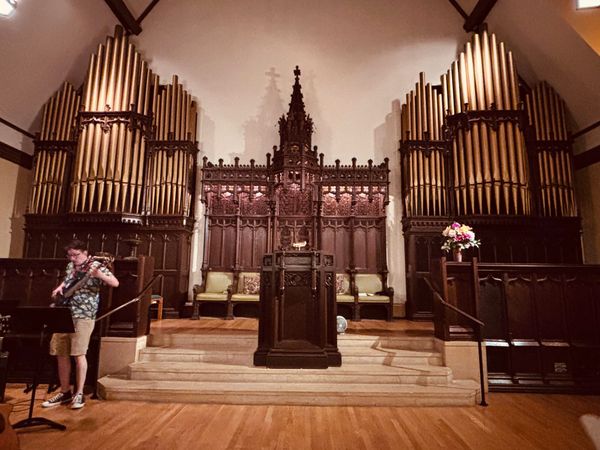
These are the people who complain about anything that smacks of theology, God talk, touchy feely stuff. They don’t like when we do rituals. They sometimes don’t even like that we interrupted a conversation with a worship service. And sometimes they don’t even come to worship, but they’re standing by the door as the postlude concludes, ready for coffee hour and all the meetings that might follow. These are the people who will serve on ten different committees but choose to go skiing or hiking on a Sunday morning, because ‘nature is my church.’ RBNSs are not interested in the actual spiritual content we long to provide.
And what I fear happens in too many congregations is that we try to cater to them, to prioritize the coming together and diluting the praying together. We prioritize the intellectual sermon over the spiritual deepening sermon. We lean into wishy-washy language about belief and theology. And we do this in favor of keeping them in our pews and our meeting rooms. This isn’t a new problem, by the way; in the early 2000s, there was a lot of discussion about how to gently reintroduce what then UUA president Bill Sinkford called ‘the language of reverence.’1 (I know in other liberal religious settings, this is less of an issue, but it’s still present.)
This is an issue - because too many other seekers come to our doors, sit in our pews, and don’t feel anything spiritual is happening. They are longing for, craving, desperate for it. But when we flatten our words and remove any possibility for spiritual deepening to happen in our pews, we shut out those who need us most. We become unwelcoming. We create a club where outsiders cannot belong unless they buy into this one mode of being.
And that’s a problem. Especially if we proclaim ‘all are welcome’ and don’t say the ‘as long as you conform’ part out loud. Yes, we talk a lot about welcome and belonging in terms of diversity, equity, and inclusion; but there’s a way in which spirituality contributes - and is often ignored.
As it happens, this is what I’ll be studying this year as I undertake my doctoral project - in broad strokes, I’m looking at how small changes in our approaches to worship can bring a more inclusive, embodied, and spiritual experience. I’ll share more as it unfolds.
But I think there is something we can do to continue welcoming the RBNSs and helping them embrace the Spiritual without compromising who we are and who we want to become.2
I often tell the story of the woman who berated me for using the word “God” in describing my personal theology, suggesting it was unwarranted and that I could use other language. Yet every Sunday, as the congregation repeated a covenant that ends with the line “thus do we covenant with each other and our God”, she would catch my eye, and hiss an S at the end of “God” as though that was… telling me off? And yes, she attended every. single. week. ↩
As I went searching for an image to use for this post, I found an article from about two weeks ago also looking at this RBNS question. Seems we’re asking some of the same questions, but she is drawing a different conclusion, suggesting it’s the religion that is the problem, not a personal investment in their spiritual health. I think we can do more within our communities to both welcome the whole self of the RBNS and the Seeker. ↩