Singing Praises
we don't have to agree on everything to appreciate beauty
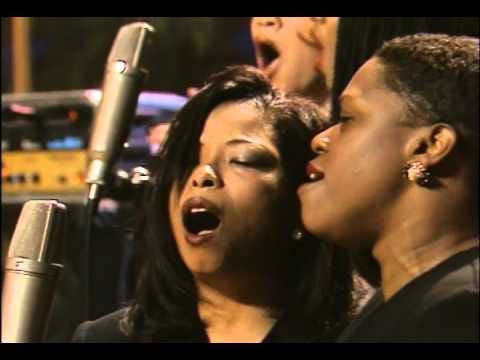
On December 30th, musician Richard Smallwood died. Smallwood revolutionized gospel music in the 80s and 90s, bringing classical precision to biblical texts, many of which come from the Psalms.
I was first introduced to Smallwood’s music, along with other gospel giants like Fred Hammond and Hezekiah Walker, in seminary. I joined the gospel choir led by M. Roger Holland, now a professor of music and religion and director of The Spirituals Project at the University of Denver. I was hesitant to join at first, because I don’t come from the tradition, I am not black, and I am not Christian. But Roger encouraged me to join. He convinced me it would be a joyful opportunity to learn about the gospel tradition, to deepen my musical knowledge, and to expand my vocal abilities.
What I discovered is a rich and gorgeous sacred music tradition with a wide variety of theologies and perspectives. I learned different styles, different ways of singing, new kinds of harmonies and the way gospel singing can create community. And yes, I experienced great joy. Over my three years with the gospel choir, I did occasionally encounter some theology that I did not agree with, but I knew that my being part of the choir, singing songs I disagreed with, like “Jesus Paid It All” (which is still a total banger) was in service to a larger story, and that message mattered to some folks who attended the services when we sang.
I bring all of this up because when Smallwood died, Dr. Stacey Patton, professor of journalism at Howard University, talked about being an atheist and still being inspired by Smallwood’s music. She writes on Facebook,
I am often asked how I can be an atheist and STILL attend Black churches and STILL love Gospel music and STILL embrace Black Liberation Theology.
I always say that multiple things can be true. I live in nuance and gray areas.
It is not a contradiction that I am an atheist and love Black Gospel music. It only looks like one if you believe religion is the only doorway to meaning, or that Black culture must be filtered through Christian belief to be legitimate. That assumption itself is a product of colonization.
Here’s the thing. We never know what we’re going to like until we try a thing. And what inspires one person may not inspire another person. And we can like things - or not - that are not common to our cultures of origin, or which don’t exactly match our beliefs or values. And that’s okay. More than okay. Whether it’s music, or particular themes, or particular poets, or a particular set of rituals, not everything is for everyone. And it should take you so far out of the experience because you’ve heard a song you don’t like, or (and this may be a Unitarian Universalist issue) they say the word ‘God’ too much. Because guess what: someone needed that song. That poetry. That word. That perspective of the eulogy.
Richard Smallwood’s music changed something in me. It opened me to the possibility of seeing mystery in a new way. When I sing “I Will Sing Praises,” I am not suddenly professing a particularly way of worshipping. Instead, I feel sense of sacredness in all. I’m marveling at the intricate harmonies, the incredible piano accompaniment, the sense that we are more than the sum of our parts, and spirit show shows up.
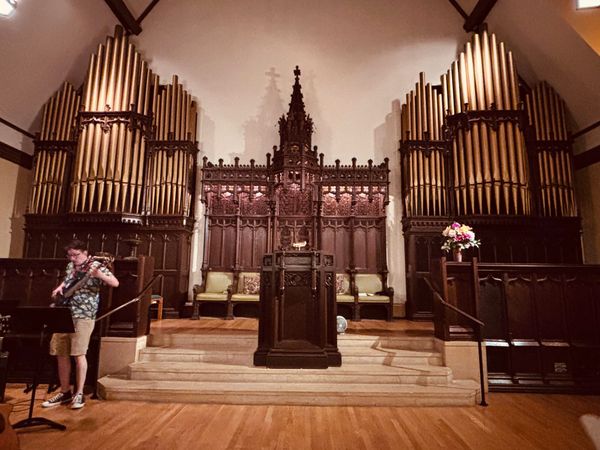
I’m also bringing this up because I’m thinking a lot lately about sacredness in worship. I worry that sometimes we are so afraid to offend, Sunday mornings become a collection of people drinking coffee and connecting with friends, while a little bit of a worship service sneaks in through the back door. I worry liberal religion has become so head lead, they have forgotten to open our hearts.
And yes, I know some people struggle and can feel triggered. I know we have some people who bring in spiritual wounds, especially those who come in from the 21st-century evangelical church. Our work is to hold people in their pain, help them heal. But if we don’t let that mystery that some call God, or Spirit, Or Love, into our midst, especially when we are gathered intentionally, I don’t know how we help anybody heal.
Maybe we start, by listening to one of Smallwood’s greatest pieces, “Total Praise,” and recognizing the beauty of this song.