The Ecstasy and the Laundry
On Monday, I had the long-overdue opportunity to spend a day with my friend and colleague, Rev. Dr. Oscar Sinclair. We talked about everything while we drove around town, shopped, and relaxed - and not surprisingly, we fell back into our habit of discussing deep questions of theology, governance, and worship.
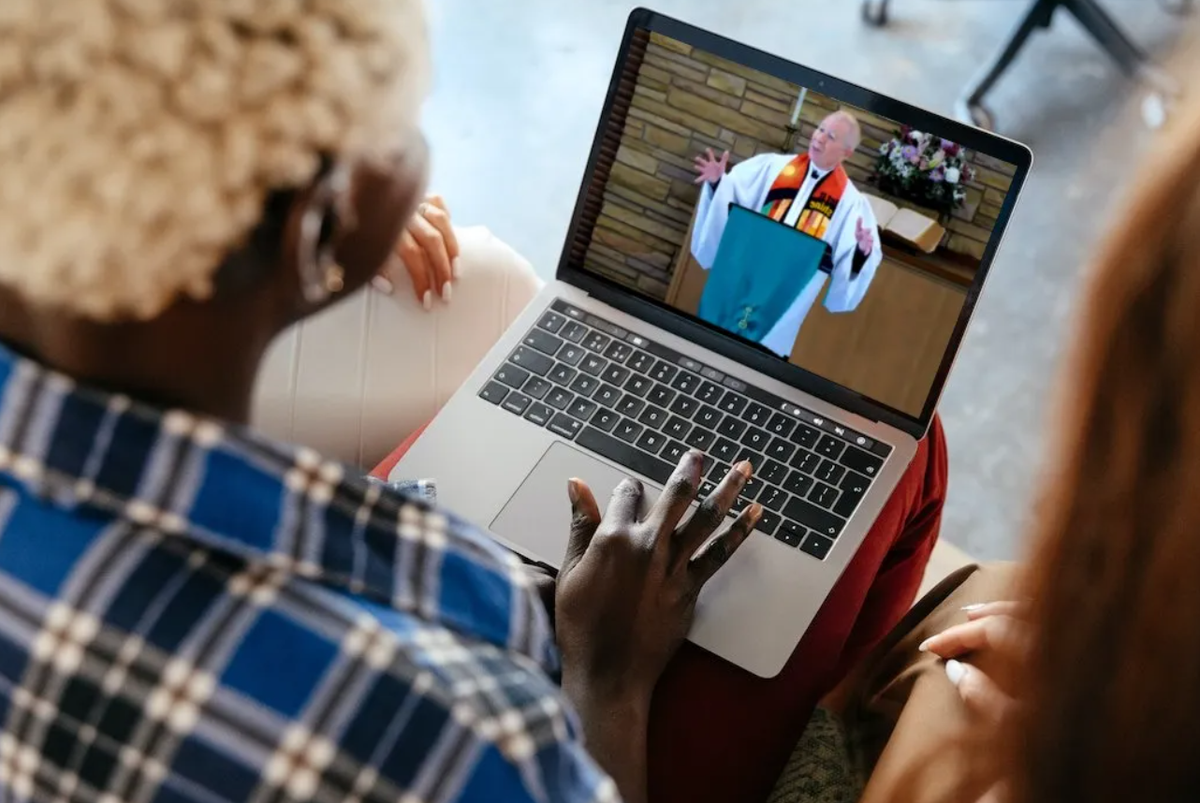
Oscar's been reading Ana Levy-Lyons' book The Secret Despair of the Secular Left, in which she comments on the disembodiment of much of liberal religion; that we are too much in our heads (fair) and that multi-platform/online worship may only be serving to further distance our spiritual lives from our bodies (also fair). Oscar noted that on an average week, about 60% of attendees watch the recording of worship instead of attending in person. And he asked me, an expert on worship, what we can do about it, or if embodiment - physically being together - matters.
We drilled down a bit, and we identified that the 60% fall into three categories: new visitors checking them out, the housebound and infirmed, and others - most of whom come in person sometimes, but less often since online worship became commonplace.
Now to be clear, Oscar isn't asking to end online worship - accessibility and outreach matter significantly. He's a bit worried about the leaders who might be so overwhelmed by their leadership roles that they avoid Sunday mornings in person. And he's a bit worried that we aren't doing enough to engage our whole selves in worship so that people would choose coming to the building over laundry.
And more, he's worried that for that 60%, they aren't getting a holistic experience of worship and faith formation.
Of course, I had some basic answers, which includes the thing I used to say when I lead multiplatform worship trainings in 2021: we cannot offer the same experience, but we can invite them into a parallel experience. We can invite them to move their bodies, light candles, participate in rituals, sing along, repeat words, etc.
But of course, we can't make them.
And peer pressure - even the subtlest of pressure exerted by a group of people all doing the same things and not wanting to stick out - is a powerful tool. (I think about how many standing ovations I've reluctantly participated in at plays because I didn't want others to think I was a jerk - even if the performance didn't warrant it.)
And we know that worship is, at its core, a communal act. What happens in that hour is made not just by the people on the chancel but by the people engaging and participating. Even if the service is largely delivered (like a play or a concert or a stand-up set might be), the live congregation (or audience) matters. Heck, we all learned that during the lockdown phase of the pandemic - how many jokes did I tell? Hundreds. How many of them landed? I haven't a clue, because I was alone in a room talking to a computer screen. I adjusted my delivery and provided pauses, hoping there were at least giggles in various living room and kitchens (and probably laundry rooms too), but I'm not sure my body - or theirs - were in it, reacting and connecting.
I'll never forget my first service in person when we came back - it was at the UU Congregation in Southern Delaware, and while attendees and worship participants were all masked and distanced, they were living, breathing, flesh and blood people in front of me. And I cried. I felt their presence so deeply, so viscerally, it took my breath away. We worshiped in a way I hadn't experienced in well over a year. And it mattered.
So what do we do? Do we assume that the people watching online are finding ways to embody worship and be present when their presence (and ours) can't be felt? Are they having a real experience, or are they spectators of an experience? Is there anything to be done? Do we have to do more engagement outside of worship so they get some kind of experience of the sacred? What is missing in our liberal faiths if we're not experiencing the embodiment of the gathered?
I have no answers. I often don't, when Oscar asks me questions like this. But I can't get it out of my mind, knowing I was one of the biggest proponents of multiplatform worship and now wondering about the long-term effects of those choices.
Let me know what you think, or what you experience when you're online versus in person.
Hold My Chalice is a reader-supported publication and part of my ministry. Consider showing your support by becoming a free or paid subscriber!