The Ship of Theseus
how much has to change before the thing is no longer the thing?
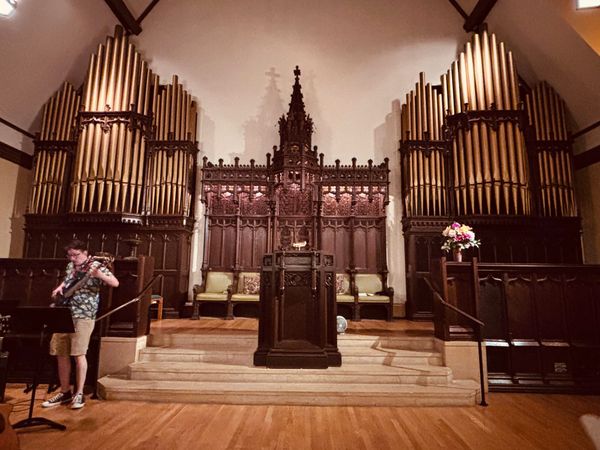
I heard something surprising to me not long ago - the idea that changing the bylaws of the Unitarian Universalist Association to reflect a different way of naming our central tenets meant that if the changes pass at our next General Assembly, we will have completely changed the faith.
(For my non-UU readers: we are going through a bylaw-mandated process to review and update our statement of purpose (because we are non-credal); in the 1980s, this was outlined as a series of principles. We have added and adapted to those principles since then, but now we have been rethinking them, looking at who we are now, and have a proposal to update them to a set of values that feel - to many of us - both reflective of who we already are but also more agile as we look toward an uncertain future.)
It surprised me, because so much of who we have always been - since long before we were an association of Unitarians and Universalists - remains. We retain our understanding of god as one, as our reason being a strength for us to understand ourselves, our world, and that which is (or may be) beyond us. We retain our understanding of god as love, and as that love being meant for all, and saving all, from the hell we experience in this world. We retain our understanding that there is always more to know, to experience, and to include. And we retain our grounding in compassion, empathy, and a sense of justice and liberation for all.
The words may change - they often do. But our core remains.
So are we the same?
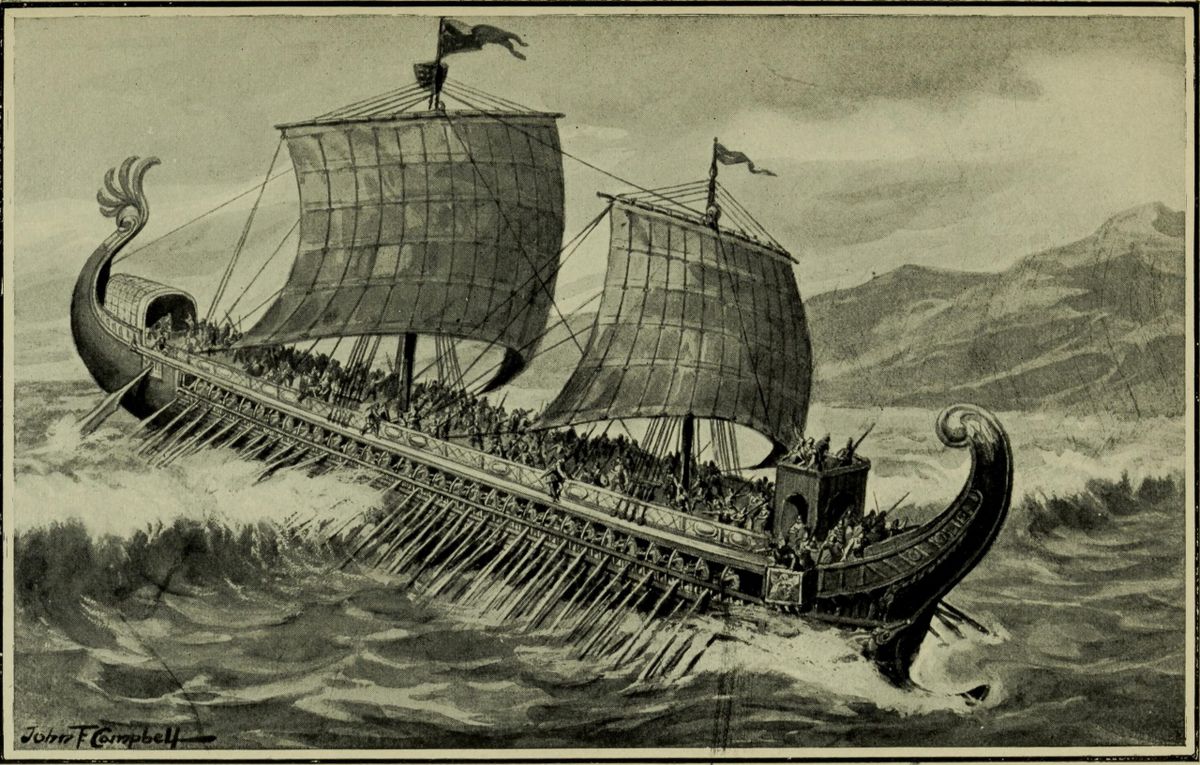
I’m reminded of the philosophical question identified by Plutarch in Life of Theseus:
“The ship wherein Theseus and the youth of Athens returned from Crete had thirty oars, and was preserved by the Athenians down even to the time of Demetrius Phalereus, for they took away the old planks as they decayed, putting in new and stronger timber in their places, insomuch that this ship became a standing example among the philosophers, for the logical question of things that grow; one side holding that the ship remained the same, and the other contending that it was not the same.”
In other words, if every part of the ship, over time, is changed, is it still the same ship?
And if it’s not, then is any organization over 25 years old the same? Because every organization I know changes their mission and vision statements every five years or so, or they diversify their offerings, or they move, or they change priorities, or they have a completely new leadership and staff (or some or all of the above). We all know organizations that have done this, but who have retained their grasp on history, their main aims, their central identifications.
In other words, I’m not talking about the modern GOP, who has lost their sense of their history, and their main aims, and their central identification - if they hadn’t, they’d still be actually the party of Lincoln, or at least the party of Eisenhower. But I digress.
How much does any organization - or any faith - have to change to no longer be what they said they are?
And as I typed that, I also thought about some parts of the fundamentalist Christian movement that has fallen for the nationalism and prosperity gospel, having seemingly lost its understanding of Jesus’s message; are they still Christian, when they have left the basic tenets of Christianity on the curb?
So yes, it’s possible to be something completely different.
But to my fellow UUs: do these word changes not reflect who we are? Do they not honor our history, our present, and our hope for the future? Is this not still Theseus’s ship?
Where is the line? What are the indicators that the thing is no longer the thing?
Or is it possible that those thinking our faith has completely changed are engaging in at least a bit of nostalgia and at most a fair dose of hyperbole?