We're here, we're queer
We're widening the circle
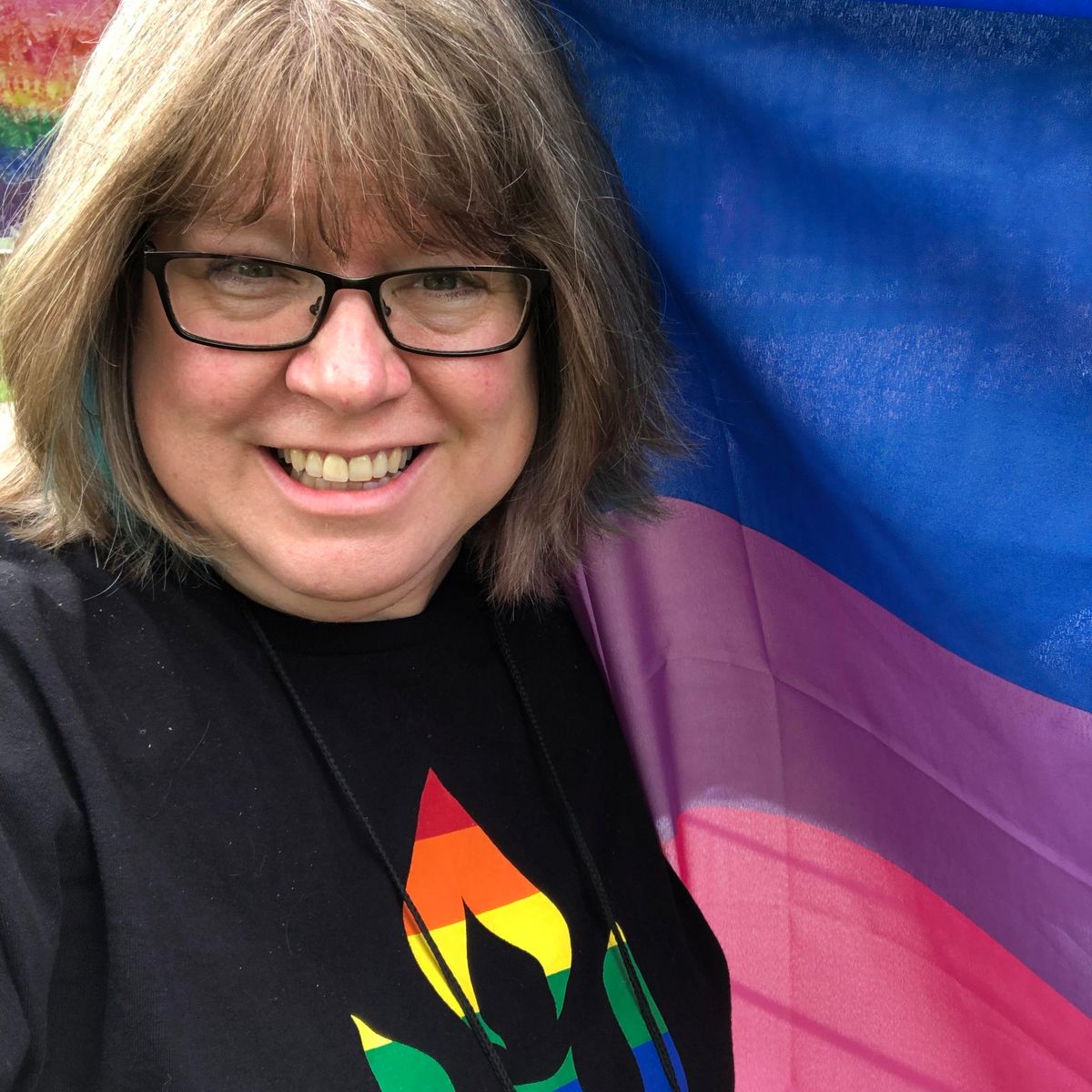
I had the rare opportunity to be in the pews for a Sunday morning worship service this past week, and I was thrilled when my colleague, Rev. Omega Burkhardt, told me it was Pride Sunday and the centerpiece of worship was a drag story hour.
What a delight.
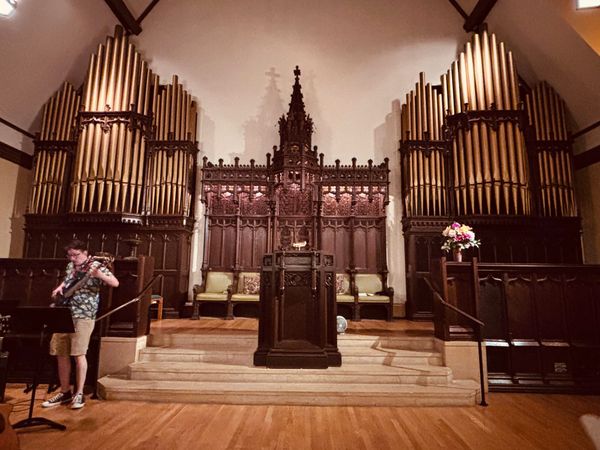
The sanctuary in Pasadena, California (Neighborhood Unitarian Universalist Church) was alive with color and joy and laughter and smiles. There was openness, and welcome, and invitation. There was meaning, and commitment, and prayer. And yes, there was a dance party.
But here’s the thing: no one in the sanctuary seemed upset, suspicious, or standoffish about it. Everyone joined the dance party. Everyone did the fun drag version of “Wheels on the Bus.” Everyone sat in awe and then erupted in standing ovation as a choir member performed “Hell Together.” And nearly everyone approached the altar for a queer glitter blessing (and yes, it was so powerful I kind of ugly cried on my way back to my seat).
As I sat in the quiet moments, I remembered the day before, where we ordained Rev. Angeline Jackson, a queer Jamaican woman who will begin serving in Davis, California this year. We celebrated her significant contributions to the LGBTQIA community in Jamaica, her call to ministry, and the fullness of her beautiful traditions and beautiful spirit. Everyone celebrated, sang, danced, was moved. And after the ordination, everyone celebrated and danced some more.
As I considered the 24 hours I’d just experienced, I thought about all of the queer ministers we have ordained (myself included), the queer music directors and religious educators we’ve hired, the queer lay leaders we have built up and installed into positions of authority.
And then I remembered a congregant from a few years ago who insisted that we are not a queer church - that’s the MCC down the street, and we shouldn’t participate in this sort of thing too loudly.
Except…
We kinda are a queer church.
And not just because a lot of queerfolk find their place and their faith and their hope amongst us, but because by the very nature of who we claim to be and the way our theology has developed, we tend to queer the texts, queer the dogma, queer the ideas that no longer serve humanity.
When we talk about “queering” we are, on one level, examining and interpreting stories/texts/histories/ideas through a queer lens, challenging heteronormativity, looking for the gays and the transfolk hidden in plain sight. Queering is how we have come to understand British monarchs William II, James I, Anne, and others might have been gay. Queering is how we can read novels and letters from previous centuries and see the deep love stories of ‘good friends’ and ‘Boston marriages.’
But queering is also more broadly understood; as theologian Thelathia "Nikki" Young puts it, queering is a deconstruction of “the logics and frameworks operating within old and new theological and ethical concepts… queering “dismantles the dynamics of power and privilege persisting among diverse subjectivities.”
We’ve been doing this all along. Once we started thinking critically about what we were being taught about God, the Trinity, salvation, Hell, and other questions of morality, we were setting the stage for that act’s inevitable next steps: queering. It is our habit to keep learning the things that call us to keep drawing the circle of love wide.
That’s pretty queer of us.
So yes, in our congregations filled with people who are straight, and people who are cisgendered, and also filled with people who are not straight, and people who are trans, we collectively approach the deepest center of our faith - love - queerly. Openly. Inquisitively. Gracefully. Compassionately.
Isn’t that who and what we want to be?
One final note: among the songs we sang on Sunday was Jason Shelton’s “Answering the Call of Love,” which, as I have argued on Far Fringe, is a stronger statement than the song’s original title. But leave it to Neighborhood to push it a little further. On Sunday, we sang “Answering the call TO love.” Yeah… changing one preposition makes such a difference. I was moved to tears.
Happy Pride, y’all.